Why Titan
Why TITAN Is Built to Protect Your Production, Not Just Win Your Order
TITAN is a metal stamping supplier built around disciplined decision-making, structured quality systems, and long-term production thinking. We support customers who need a manufacturing partner that protects program stability from RFQ through repeat production, not one that quotes fast and solves problems later.
Proof module:
Experience marker | Detail |
Years in operation | 36+ years |
Automotive Tier-2 experience | Toyota, Honda, Proton, Perodua supply chains |
Quality certification | IATF 16949 |
ESG benchmarking | EcoVadis platform |
Environmental roadmap | ISO 14001 certification targeted by 2027 |
More than a manufacturer
At TITAN, our role extends beyond producing components. We work to ensure that the parts we make remain reliable across the entire life cycle of a customer’s project. That means making practical decisions early, controlling risk before production begins, and building the kind of operating culture that supports consistency year after year.
This difference matters because many supplier problems do not begin on the shop floor. They begin earlier: when a project is accepted too quickly, launched without enough process understanding, or supported by systems that depend too heavily on individual knowledge rather than institutional discipline.
36 years of production experience
Founded in 1990, TITAN has developed deep experience in demanding production environments. Our systems and culture have been shaped by Tier-2 work within Toyota and Honda supply chains, where consistency, process discipline, and production planning are not aspirational, they are baseline expectations.
That experience has taught us that reliable manufacturing is not built on confidence alone. It is built on disciplined review, realistic feasibility assessment, and the willingness to protect a customer’s program before avoidable problems reach production.
Second-generation leadership
TITAN is now led by the second generation of leadership. Rather than simply preserving the company’s legacy, leadership has focused on building the systems, governance, and management transparency needed for long-term sustainability.
This includes process-driven management, open operational dashboards, structured leadership development, and a culture that treats continuous improvement as part of daily operations, not a separate initiative.
The result is a company that retains the practical strength of its founding years while becoming more transparent, more structured, and more resilient for the decades ahead.
Danny Ng, TITAN’s second-generation leader, frequently shares reflections on this journey through his LinkedIn articles (linkedin.com/in/dannyngky), addressing the realities of second-generation entrepreneurship, manufacturing discipline, and the transition from founder-dependent leadership to system-driven reliability.
Governance through systems
Our operations are structured around disciplined management systems: IATF 16949 quality management, documented operational procedures, cross-functional problem solving, and continuous improvement programs.
For customers, that means more than a certification badge. It means a supplier that is actively building repeatable behavior into its organization, from RFQ review and launch planning to production monitoring and corrective action. When your audit team visits, they should see evidence of these systems in daily practice, not just in a file cabinet.
Responsible growth
We believe growth should be built on capability, not ambition alone. That is why TITAN does not pursue projects that exceed machinery capability, create production instability, or compromise quality and ethical standards.
TITAN also does not manufacture products that conflict with our business principles, including vape and e-cigarette components and military-related items. This is not a marketing position. It is an operating standard.
This discipline can appear conservative from the outside. In practice, it protects the customer as much as it protects us. The most expensive supplier decision is often not the one with the highest quotation, it is the one that creates hidden production problems six months after launch.
How we control risk
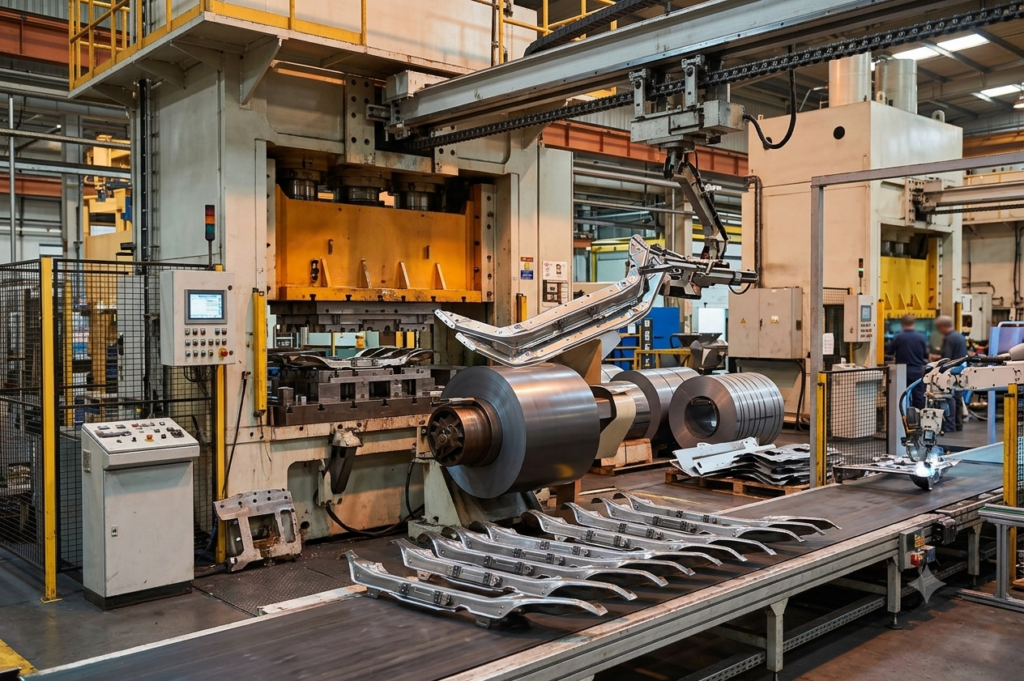
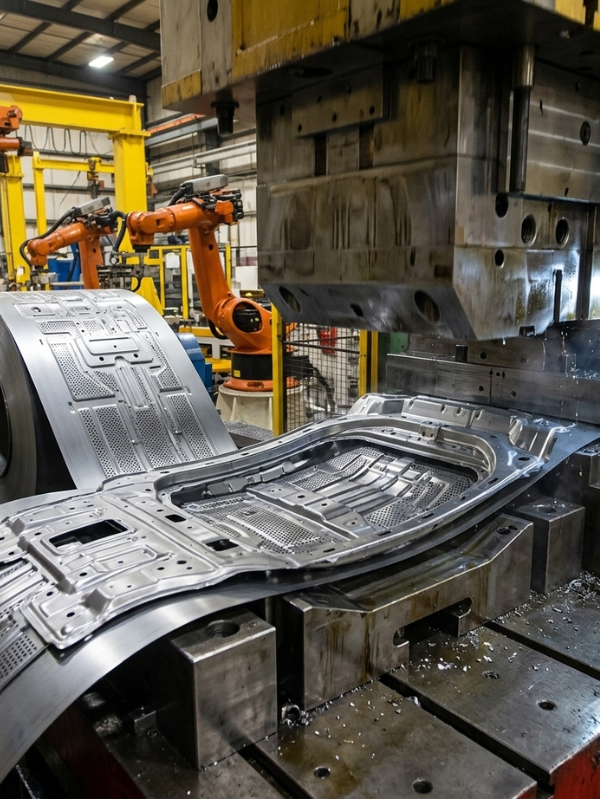
TITAN’s approach to risk control begins before production starts and continues across the life of the program.
- Technical RFQ review to assess process feasibility, tooling strategy, machine fit, production flow, and manpower requirements. If the project does not pass this review, we decline it, regardless of order value.
- Process validation to evaluate forming feasibility, material behavior, tooling complexity, and downstream process stability before tooling investment.
- Supply chain support when customers face material shortages or unexpected disruption. In one case, TITAN activated its regional supplier network to help a customer secure an exotic raw material during a shortage, stabilizing production during a critical period even though the sourcing problem was outside our contractual scope.
- Continuous improvement through QCC activities, 3S workplace organization, operational dashboards, EcoVadis ESG benchmarking, and ISO 14001 preparation, so the organization keeps getting stronger before external pressure forces change.
What this means for buyers
A supplier relationship should reduce pressure on the customer’s organization, not create more of it. TITAN’s operating model is designed to help procurement, quality, and engineering teams make safer supplier choices by combining technical discipline with realistic long-term thinking.
That is why TITAN is best understood not simply as a manufacturer, but as a lower-risk production partner for programs that need to remain stable over time.