
Metal Stamping Manufacturer

Metal Stamping Manufacturer for Stable, Repeatable Production
TITAN produces stamped metal parts for automotive and industrial programs where stable repeat production matters as much as quoted cost. We support buyers who want a metal stamping manufacturer that reviews technical fit, process route, and long-term operating requirements before accepting the work.
Who it is for
- Automotive and industrial buyers seeking a metal stamping manufacturer for repeat production programs.
- Procurement, quality, and engineering teams evaluating supplier fit before launch.
- Companies seeking a Southeast Asia manufacturing partner with IATF 16949 certification, structured systems, and Tier-2 OEM experience.
When to consider TITAN
- When repeatability, documentation, and process discipline matter as much as quoted cost.
- When a project requires realistic feasibility review, not just a quick yes and a competitive price.
- When supply-chain resilience, ethical manufacturing standards, and long-term relationship fit are important to your sourcing decision.
What TITAN manufactures
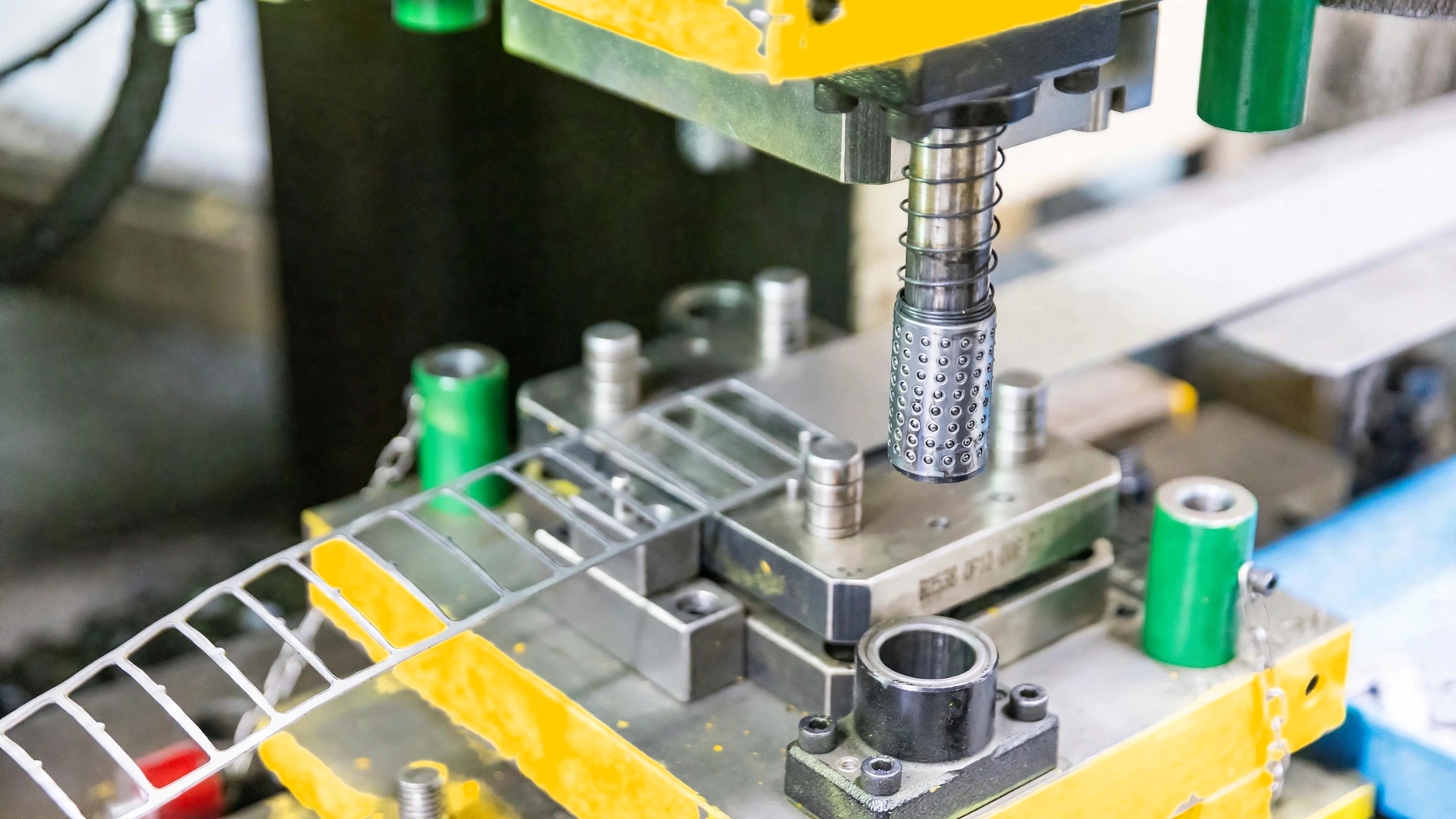
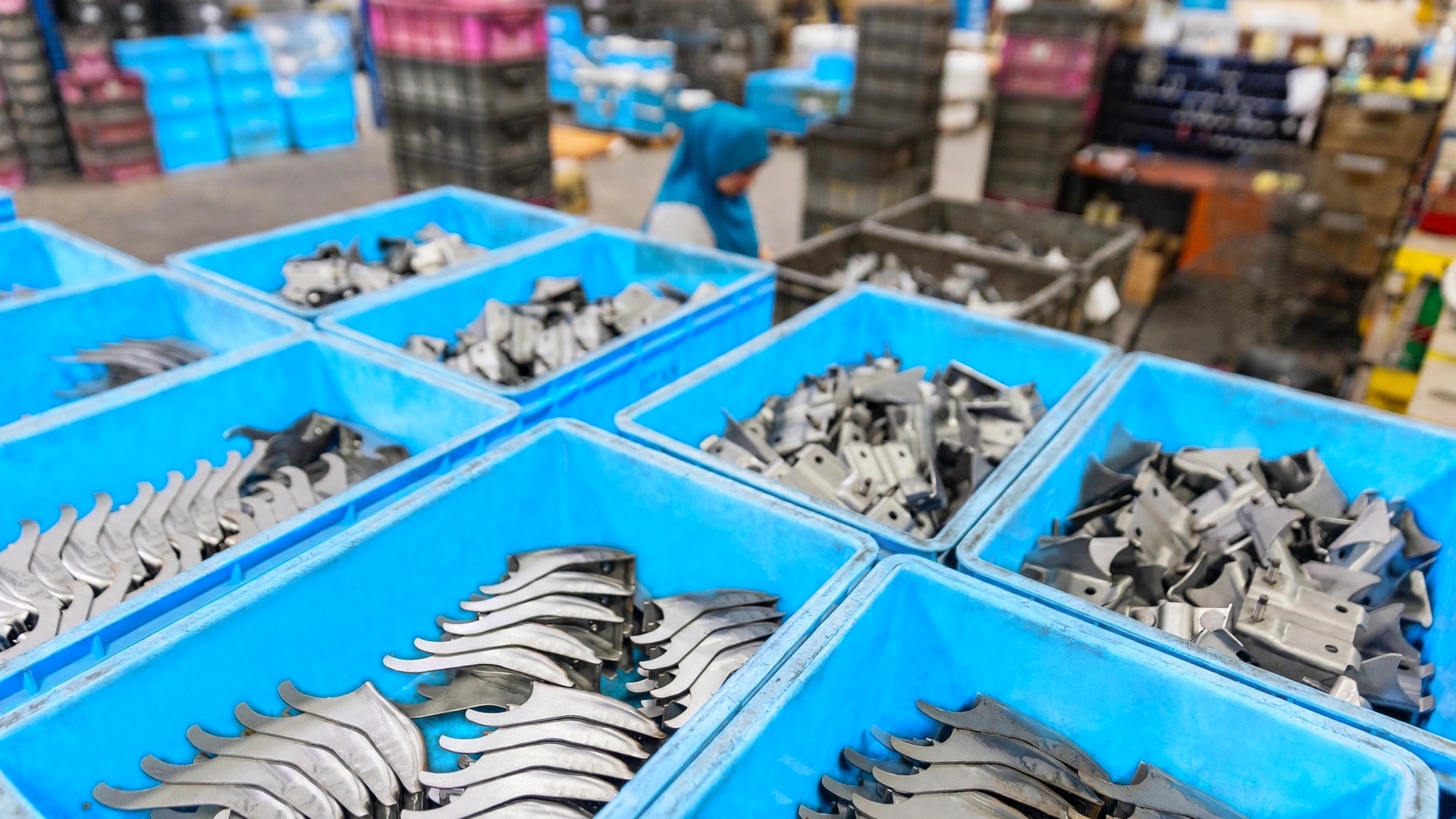
TITAN supports stamped metal parts that may flow into welding, assembly, or finishing processes. Our work is best suited to programs where manufacturability, tooling strategy, and downstream stability must be considered together rather than in isolation. Parts range from structural brackets and mounting components to precision-formed elements for automotive and industrial equipment applications.
Metal stamping, explained for sourcing teams
Metal stamping is a cold-forming process that turns flat sheet or coil into finished shapes using a press and a set of hardened dies. Each press stroke performs one or more operations on the material. Because the geometry is built into the tooling, every part made from a validated die follows the same path. That is why stamping is the preferred method for repeat production of brackets, clips, reinforcements, housings, and structural components.
Most stamped parts are made through a combination of these core operations:
- Blanking: cutting the outer profile of the part from sheet or coil.
- Piercing: punching holes, slots, and cut-outs.
- Bending and forming: creating flanges, angles, and three-dimensional shapes.
- Drawing: stretching material into cup, box, or shell forms.
- Embossing and coining: adding ribs, stiffening features, or precise local geometry.
- Trimming: removing excess material after forming to reach the final profile.
The value of a stamping supplier lies less in knowing these operations and more in knowing how to sequence them, so the part forms consistently without splitting, wrinkling, or drifting out of tolerance over long production runs.
Metal stamping or metal pressing?
They are the same process. In the United States, the term is metal stamping, and the parts are called stamped metal parts or stampings. In the United Kingdom and much of Europe, the same work is usually called metal pressing, and the parts are called metal pressings. TITAN serves buyers who use both terms, and everything described on this page applies to each.
Stamping methods and how the route is chosen
There is no single best stamping method. The right route depends on part size, geometry, annual volume, and how many operations the part needs. TITAN selects the method during feasibility review, before the quotation is issued, not after.
Method | How it works | Typically suited to |
|---|---|---|
Progressive die stamping | Coil feeds through one die with multiple stations. Each stroke advances the strip and completes an operation at every station until the finished part is cut free. | Small to medium parts at medium to high volumes, where speed and consistency matter. |
Transfer die stamping | Individual blanks are moved between stations by a transfer system, which allows deeper forms and larger parts. | Larger or deeper parts that cannot stay attached to a carrier strip. |
Line (tandem) die stamping | Separate dies run in sequence, with the part moved between operations. | Large parts, lower volumes, or parts that need a flexible operation sequence. |
Compound die stamping | Several cutting operations are performed in one stroke at a single station. | Flat parts that need a tight relationship between features. |
TITAN runs progressive die, line (tandem) die, and compound die stamping. Transfer die stamping is shown above for comparison.
Materials TITAN works with
Material choice affects formability, springback, tool wear, weldability, finishing, and cost. We review the material specification against the part’s function before committing to a process route, and we flag grades that may create forming or supply risks.
Material family | Common grades | Typical considerations |
|---|---|---|
Cold-rolled steel | SPHC-PO, SAPH440 | Good formability and weldability; usually needs a finish for corrosion protection. |
Hot-rolled and pickled steel | SPC440, SPFC590Y | Suited to thicker structural parts; surface condition affects appearance and coating. |
High-strength low-alloy (HSLA) steel | SGCC, SECC, SACC60/60 | Lower weight for the same strength; higher springback and tool load must be planned into the die. |
Stainless steel | SUS304, SUS409, SUS436, SUS442 | Corrosion resistance without coating; work-hardens quickly and increases tool wear. |
Aluminum | AA5754 | Lightweight; more prone to galling and surface marking. |
Material thickness range: 0.5 mm to 3.2 mm (0.020 in to 0.126 in).
Where a specified grade is difficult to source, we discuss approved alternatives early. TITAN’s experience during an exotic raw material shortage showed why material planning belongs in the supply conversation, not only the engineering one.
Production envelope
Proof module: TITAN metal stamping capability at a glance
Capability | Detail |
|---|---|
Press tonnage range | Multiple presses covering a range of tonnages, matched to part size and complexity during feasibility review |
Number of presses | 12 |
Maximum bed size | 1,400 mm x 840 mm (55.1 in x 33.1 in) |
Maximum part or blank size | 400 mm x 400 mm (15.7 in x 15.7 in) |
Typical annual volumes | 20,000 to 100,000 pieces per part number, per year |
In-house secondary operations | Projection welding, spot welding, MIG welding, riveting and clinching, tapping, and assembly |
Coordinated processes | Finishing support through trusted partners, where required |
Quality system | IATF 16949 certified |
Automotive experience | Tier-2 supply into Toyota, Honda, Proton, and Perodua programs |
Years in operation | 36+ years, founded in 1990 |
What drives the cost of a stamped part
Buyers comparing quotations often compare piece prices alone. In practice, the total cost of a stamped part is shaped by several factors, most of which are set during design and tooling decisions:
- Tooling investment: die complexity, number of stations, and expected tool life. Tooling is usually quoted separately or amortized across program volume.
- Material utilization: how efficiently the strip layout nests parts. Material is often a significant share of piece cost, so scrap rate matters.
- Press time: press size, stroke rate, and the number of operations per part.
- Tolerances and inspection: tolerances tighter than the function requires add tooling and inspection cost without adding value.
- Secondary operations: welding, tapping, finishing, and assembly.
- Packaging and logistics: especially relevant for overseas programs shipping to the United States or Europe.
A quotation that looks lower at the RFQ stage can become more expensive if it relies on a tooling route that needs repeated correction after launch. In his LinkedIn article “The Art and Science of Metal Stamping: Balancing Strength, Efficiency, and Cost” (linkedin.com/pulse/art-science-metal-stamping-balancing-strength-efficiency-danny-ng-d8isc), Danny Ng explains how these tradeoffs are balanced in practice.
From RFQ to repeat production
Proof module: The TITAN production route
Stage | What happens | Why it matters to buyers |
|---|---|---|
1. RFQ screening | Technical and commercial fit is reviewed before quoting. | Protects the program from commitments that cannot be supported. |
2. Feasibility and DFM review | Geometry, material, tolerances, and process route are assessed. | Surfaces design risks while changes are still inexpensive. |
3. Tooling development | Die concept, build, and tryout are managed with tooling partners. | Aligns tooling to long-term production, not only first samples. |
4. Sampling and approval | Samples, dimensional reports, and approval documents are submitted. | Gives the customer evidence before production release. |
5. Production launch | Process parameters and control plans are locked in. | Creates a stable baseline for repeat orders. |
6. Repeat production | Output is monitored through visual dashboards, QCC, and 3S. | Keeps quality consistent over the life of the program. |

How TITAN reduces risk for metal stamping buyers
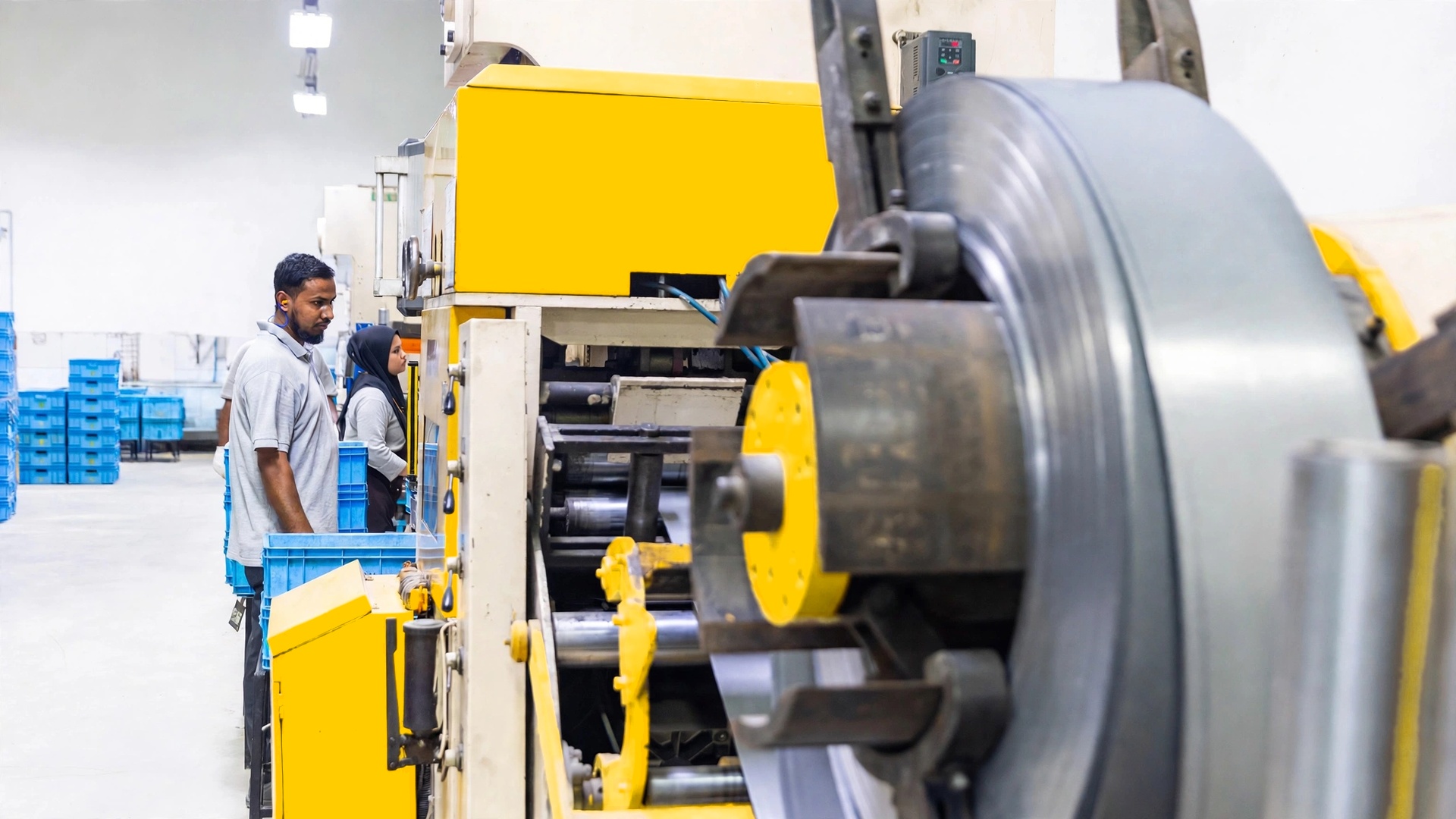
We review the RFQ, process route, machine fit, manpower needs, and long-term supportability before accepting the work. If a project does not clear that review, we decline it, even if the order value is attractive.
We treat tooling and process validation as part of launch risk control, not as separate transactions. That approach allows accepted work to be supported responsibly rather than optimistically. It also means customers can trust that an accepted quotation reflects genuine capability alignment, not hopeful capacity planning.
Why this matters commercially
A metal stamping supplier should reduce uncertainty for the customer, not create more of it. When projects are accepted without enough discipline, the real cost often appears later, through instability, late deliveries, or quality variation that compounds over repeat orders. TITAN’s approach is designed to make acceptance itself a form of protection.
Frequently asked questions
What does a metal stamping manufacturer do?
A metal stamping manufacturer produces formed metal components using controlled tooling and repeatable production methods. The scope may include progressive stamping, transfer stamping, and related forming operations depending on part geometry and volume.
What should I look for in a metal stamping manufacturer?
Look for realistic RFQ review, evidence of process validation before launch, certified quality systems (such as IATF 16949), and a track record of supporting programs over time, not just winning initial orders.
Can TITAN support overseas buyers?
Yes. TITAN supports local, regional, and global supply-chain programs from Malaysia. Our experience includes Tier-2 supply to OEM programs for Toyota, Honda, Proton, and Perodua, as well as work with international industrial equipment manufacturers.
Is metal pressing the same as metal stamping?
Yes. Metal stamping is the common term in the United States, while metal pressing is more common in the United Kingdom and Europe. Both describe forming sheet metal parts with a press and dies.
What is the difference between progressive die and transfer die stamping?
In progressive die stamping, the part stays attached to a strip of material as it moves through a series of stations in one die. In transfer die stamping, separate blanks are moved between stations. Progressive dies are usually faster for small and medium parts, while transfer dies suit larger or deeper parts.
What materials can be used in metal stamping?
Common materials include cold-rolled steel, hot-rolled steel, high-strength low-alloy steel, pre-coated galvanized steel, stainless steel, and aluminum. The right choice depends on strength, formability, corrosion protection, weldability, and cost. TITAN reviews material selection as part of feasibility.